
 The distribution of fuel in Brazil is a dynamic enterprising industry. Comprising 3,266,584 square miles of territory and thus large traveling distances to cover reaching cities along the Atlantic seaboard as well as inland in remote locations including the state of Mato Grosso, the state of Goiás and deep inside the Amazon Rainforest, transportation is inherently vital for the growing Latin American nation. As a result, motor and air passenger traffic are sectors of the economy that require attention and investment. Currently, motor traffic is smooth and taken care efficiently with the introduction of smart techniques to reduce carbon emissions by means of using ethanol along with gasoline at service stations nationwide. Overall, there are three strategic players in Brazil addressing the need of motor traffic. These strategic players are Vibra Energia S.A., Raízen S.A. and Ipiranga Produtos de Petróleo S.A. A brief description of each one of these Brazilion players is presented as follows:
Vibra Energia S.A.: once the gas station business of Petróleo Brasileiro S.A, better known as Petrobras, the Brazilian state-controlled listed petroleum titan spun-off its wholly-owned subsidiary in 2021. Boasting over 8,000 service stations countrywide across the entire Brazilian landscape, the company is the single largest motor fuel distributor in the country. Reaching sales of more than $ 25 billion a year and over a billion dollars in profits annually, the operation is a champion of the industry in its country with access to oil refineries through pipelines and terminals belonging to its previous parent company, maintaining a relationship of mutual benefit, harmony and convenience throughout the whole petroleum industry downstream value chain. Vibra Energia trades in Brazil and its gas stations operate under the banner “VIBRA” with gasoline supplies brought in by tanker trucks from storage tanks owned by the company itself.
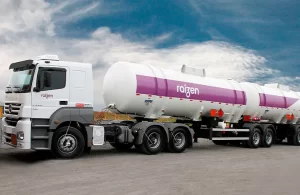
Raízen S.A.: initially a joint venture between Cosan S.A. of Brazil and the British multinational known as Shell PLC, previously known as Royal Dutch Shell Group PLC, the company went public in Brazil raising $ 1.3 billion in 2021, the second biggest IPO in Brazil that year. Today, the company is the second largest fuel distributor in Brazil with total consolidated sales reaching over $ 45 billion a year while employing over 45 thousand nationals of Brazil, Paraguay and Argentina after operating in each of these three countries. Altogether, the company is the second largest sugarcane processor worldwide after Copersucar S.A. of Brazil as well having a total installed crushing capacity of 105 million tons of sugarcane a year, second only to Copersucar’s 110 million tons of installed crushing capacity a year. Presently, Raízen crushes around 75 million tons of sugarcane per year entirely in Brazil and processes the crop in 35 bioenergy complexes on Brazilian soil comprising mills, refineries and distilleries. Accordingly, the company produces an output of 3 billion liters of ethanol a year and 4.8 million metric tons of sugar annually including many of its finished types like raw or brown sugar, refined or granulated sugar, powdered sugar, cane juice and sugar crystals. Likewise, most of the sugar is exported globally to different countries with the company being the single largest trader of sugar on the planet in the international market while most of the ethanol is distributed domestically in Brazil, Paraguay and Argentina for fuel consumption servicing the motor traffic at roughly 7,000 service stations under the “Shell” banner. In similar fashion, Raízen possesses 68 airport refueling sites and 70 fuel distribution terminals while maintaining plantations of 3.2 million acres in extension across Brazil mostly cultivating sugarcane but also other crops like cotton, corn and soybean. In addition, the company is active in the retail sector after operating around 1,000 convenience stores under the banner “Shell Select” and over 600 convenience stores under the banner “OXXO” through a joint venture with Fomento Económico Mexicano S.A.B. de C.V. of Mexico, also known as FEMSA. Similarly, Raízen is today the sixth biggest listed company in Brazil in terms of sales and the single largest private sector landholder in Latin America. The company also expanded is presence markedly in Brazil upon buying Biosev S.A. in 2021, a major sugar player once belonging to Louis Dreyfus Company B.V., the dual French/Dutch agricultural multinational giant. By the same token, Raízen is self-sufficient in its energy consumption by generating 3 gigawatts of electricity from the burning of bagasse in company-owned plants, part of the output is actually sold to other companies in Brazil.
Ipiranga Produtos de Petróleo S.A.: the company is a wholly-owned subsidiary of Ultrapar Participações S.A. The latter presently has three wholly-owned subsidiaries consisting of Ipiranga Produtos de Petróleo S.A., Ultracargo S.A. and Ultragaz S.A. Founded by the late Ernesto Igel back in 1937, an Austrian immigrant in Brazil, the company initially consisted in the distribution of liquified petroleum gas or LPG for use in cooking among households’ kitchens in Brazil, making deliveries directly to residences through a fleet of trucks. Later in the century, Ultrapar expanded into other business areas of incursion including petrochemical operations through Oxiteno S.A. and the storage of bulk liquids through Ultracargo S.A. The former was sold in 2022 to Indorama Ventures Public Company Limited for a hefty price tag of $ 1.3 billion, a Thai multinational currently being the leader worldwide producing PET resins while the latter is kept yet today and specializes in tanks storing bulk liquids including fuels, petrochemicals, chemicals and vegetable oils at port facilities throughout Brazil including the port of Santos which is the biggest seaport in all of Latin America. Nonetheless, the biggest operation of them all is Ipiranga Produtos de Petróleo, a buoyant gas station business that operates around 6,500 service stations nationwide presently being the third largest distributor of motor fuels in Brazil. By the same token, Ultrapar was until recently an operator of pharmacies in Brazil as well through Extrafarma S.A., an operation containing roughly 400 pharmacy stores that was sold in 2021 to Empreendimentos Pague Menos S.A. for 700 million reais, the equivalent of $ 130 million. Overall, Ultrapar trades in Brazil, generates over $ 25 billion a year in sales and directly employs close to 10 thousand Brazilian nationals. The gas station business alone by itself is responsible for over 60% of the group’s combined sales while Ultragaz is the initial fully-owned LPG home distribution business.